


BLOGS
Flap Disc for Steel Seeks Balance Between Efficiency and Finish in Metalworking
In metal fabrication and welding shops, the pursuit of efficiency is constant, driving the evolution of even the most common consumables. The Flap Disc, a hybrid abrasive tool, has become a standard for operators tackling a primary challenge: transitioning efficiently between heavy stock removal and final surface finishing on Stainless Steel and carbon steel, all with a single tool.
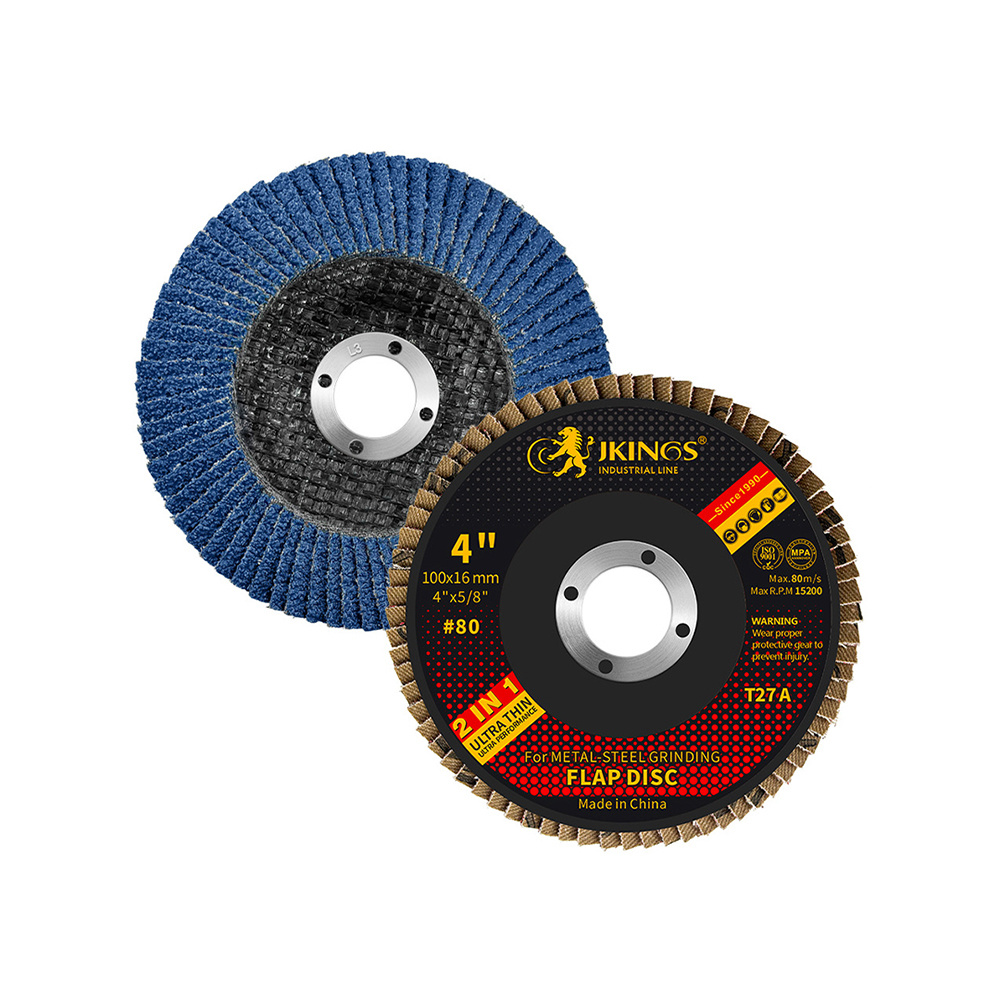
A Flap Disc is constructed by bonding numerous overlapping abrasive flaps, typically made from zirconia alumina or aluminum oxide cloth, to a rigid fiberglass backing plate. This design is fundamental to its function. Unlike a rigid grinding wheel that cuts aggressively at a fixed point, the flexible flaps conform to the workpiece's contour. This allows for a larger contact area that dissipates heat more effectively and provides a more uniform scratch pattern. The key operational value lies in its versatility. It can perform tasks that traditionally required multiple tools—starting with aggressive Grinding to remove weld seams or defects and then transitioning to finer Surface Finishing and blending, all without changing discs.
The primary application for these discs is in the Metal Fabrication industry. Welders use them as a primary tool for cleaning and blending welds, removing rust, and deburring edges on fabricated steel structures. In the automotive repair sector, they are employed for bodywork, smoothing out panels, and preparing surfaces for painting. Their ability to minimize gouging and leave a more consistent finish compared to hard discs makes them particularly valuable for working on expensive materials like Stainless Steel, where preserving material integrity and achieving a specific finish are critical.
The development of the Flap Disc focuses on material science and construction. The choice of Abrasive Grain—such as the highly durable zirconia alumina for long life on hard steels—and the bonding agents that hold the grains are crucial for performance. The density and arrangement of the flaps directly influence the aggressiveness of the cut and the final finish quality. Manufacturers continuously refine these elements to extend product life and enhance cut rates, addressing core operational costs related to consumable usage and labor time.
In summary, the Flap Disc for Steel is an engineered solution that addresses the metalworking industry's need for operational efficiency and finish quality. Its role is defined by its dual-action capability, which streamlines workflow and reduces tool inventory, making it an indispensable consumable in environments where time and results are directly measured against cost.
RELATED NEWS
Wire Cup Brush (Bowl Brush): Fast Rust Removal on Large Flat Surfaces
A wire cup brush (bowl brush) on an angle grinder cleans large flat areas fast — rust, paint, scale and slag. Knotted vs crimped, sizes 65–125mm, tips.
How Long Does a Cutting Disc Last? Life Expectancy and 9 Ways to Extend It
From 20 cuts to 150 cuts per disc — what actually determines cutting disc life, realistic benchmarks, and 9 proven ways to make your discs last longer.
What Is a Continuous Rim Diamond Blade? Chip-Free Tile Cutting
A continuous rim diamond blade has a smooth, unbroken diamond edge for chip-free cutting of ceramic tile, porcelain and marble. Learn uses, sizes 105–230mm and tips.
Asphalt Diamond Blade: Why Asphalt Destroys Ordinary Blades
Asphalt is extremely abrasive — dedicated asphalt diamond blades use tough wear-resistant bonds and undercut protection. Sizes 250–600mm, specs and tips.
Wire Brush for Rust Removal: Best Types, Grits & Techniques
The best wire brush for rust removal: knotted cup/wheel brushes for heavy rust, crimped for light rust. Step-by-step technique, safety and follow-up treatment.
Angle Grinder Buying Guide: Size, Power and the Discs That Match
Buying an angle grinder looks simple until you face the wall of options: 115 mm or 125 mm? 900 W or 2,400 W? Corded, cordless, or pneumatic? Slim body or standard? The right answer depends almost entirely on two things — what you will cut or grind most, and which discs you will run. Because the grinder is really just a motor, and the disc is the tool. This guide walks through every decision in order, so the grinder you buy matches the work you actually do.

ONLINE MESSAGE
JKINGS is a global industrial brand committed to high-performance abrasives and tools. Built on advanced Industry 4.0 manufacturing and extensive OEM expertise, we deliver precision, durability, efficiency, and reliability for cutting, grinding, and beyond.
PRODUCTS