

BLOGS
The Global Cutting Disc Industry Restructures: China Shifts from "OEM Factory" to "Technology Export Hub" as Southeast Asia Becomes a Key Market
Sep 24,2025
The Global Cutting Disc Industry Restructures: China Shifts from "OEM Factory" to "Technology Export Hub" as Southeast Asia Becomes a Key Market
On September 24, 2025, in a smart manufacturing facility in Zhejiang, China, a container of fully loaded cutting disc production lines—with precision control, automated quality inspection, and digital order integration—was being prepared for shipment to a metalworking facility in Vietnam. This marks a new milestone: for the first time, a complete “cutting disc production solution” developed in China is being exported as a technology package to Southeast Asia. It symbolizes China's ongoing transformation from an "OEM factory" to a "technology export hub" within the global cutting disc industry.
Export Trends: Technology Goes Global, OEM Shrinks
According to the latest data from the China Machine Tool Industry Association, in the first half of 2025:
China’s cutting disc exports to Southeast Asia rose 29% year-on-year.
Technology-based exports (including automation systems, formulation licenses, and equipment integration) accounted for 35% of orders—up from just 8% in 2020.
The share of traditional OEM orders fell to 28%, down from 62% in 2020.
Southeast Asia now accounts for 28% of China's total cutting disc exports—ranking second only to the European Union.
This shift reflects not only the evolution of Southeast Asia’s demand, but also China’s upgraded industrial capabilities in the cutting tools sector.
From "Assembly Line" to "Technical Partner": China's Breakthrough in Cutting Disc Innovation
Over the past decade, China’s cutting disc industry has rapidly evolved:
Material Science: Chinese manufacturers have achieved breakthroughs in resin bonding, fiber reinforcement, and wear-resistant abrasives—narrowing the gap with European and Japanese standards.
Smart Manufacturing: AI-assisted production lines now ensure micron-level tolerance, automated defect detection, and stable quality output, even for large batch orders.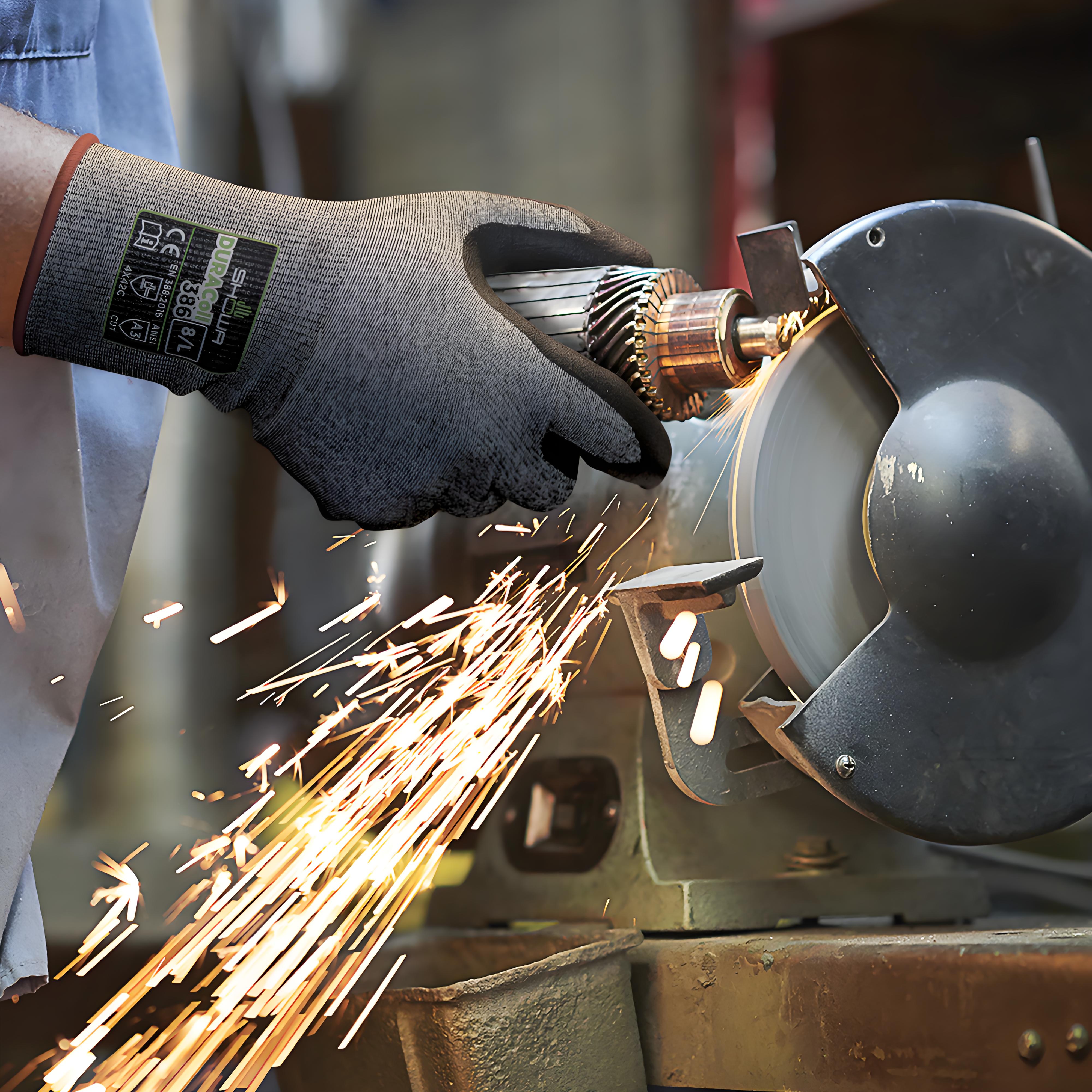
Performance: Domestic cutting discs now offer higher cutting speed, reduced burrs, and longer life—especially in stainless steel, structural steel, and non-ferrous metal applications.
"Back in 2015, we were just producing generic 4-inch discs for global retailers,” said Chen Yong, CEO of a leading Zhejiang-based cutting disc manufacturer. “Now, our customers in Southeast Asia rely on our team to help design production lines, improve yield, and reduce their total cost of ownership."
Case Study: Building an Ecosystem, Not Just Selling Tools
In Thailand, a local steel structure company recently replaced its European supplier with a Chinese one—not because of price, but due to better service and support.
The Chinese supplier provided:
A full line of 4" to 14" cutting discs optimized for structural steel.
An on-site engineer to train workers on optimal cutting techniques.
An integrated tool tracking system to monitor wear and replacement cycles.
As a result:
Cutting efficiency improved by 22%.
Tool lifespan increased by 35%.
Total annual cost savings exceeded $60,000.
“These companies aren’t just selling discs anymore,” said the factory’s purchasing manager. “They’re providing a full solution.”
Why Southeast Asia?
As Vietnam, Indonesia, and Malaysia rapidly expand their manufacturing capabilities, demand is growing for:
High-efficiency cutting discs for automotive and machinery industries.
Customized solutions for railways, shipbuilding, and construction.
Environmental compliance as governments raise emission and safety standards.
While local manufacturers often lack high-end production capabilities, European and Japanese brands remain expensive and less responsive. Chinese brands now offer a sweet spot: better performance at a more affordable price, with flexible customization and strong after-sales service.
From Exporting Products to Exporting Standards
Chinese manufacturers aren’t just following global trends—they’re helping define them.
New ISO standards for cutting disc safety and wear performance now include benchmarks led by Chinese R&D teams.
Chinese equipment suppliers are exporting fully automated production lines to Southeast Asia, bundled with proprietary software and smart QA systems.
Several manufacturers are offering multilingual control systems and localized service hubs to support long-term customer success.
Challenges Ahead: Localization & Raw Materials
Despite strong momentum, challenges remain:
Some overseas clients report difficulties due to Chinese-only software interfaces or instruction manuals.
Raw materials for top-tier performance—such as precision-grade resins and imported fiberglass—still rely on global supply chains.
To address this, leading exporters are:
Launching multilingual platforms and AI chat support for global customers.
Collaborating with local partners to build distribution centers and training schools.
Investing in upstream material production to reduce dependency on imports.
Conclusion: A Quiet Transformation with Global Impact
The restructuring of the global cutting disc industry is no longer just about cost. It's about capability, speed, and trust.
As Chinese manufacturers shift from low-margin OEM roles to strategic partners offering end-to-end cutting solutions, Southeast Asia is emerging as a key testing ground—and growth engine—for this transformation.
Whether it's infrastructure projects in Indonesia, shipyards in Vietnam, or rail construction in Malaysia, Chinese cutting disc technology is becoming embedded in the region’s industrial DNA.
This isn’t just a product upgrade—it’s a paradigm shift. And it’s only just beginning.
RELATED NEWS
Stricter Environmental Regulations Usher in a Green Revolution in the Cutting Disc Industry
By 2028, the penetration rate of environmentally friendly cutting discs is expected to surpass 60%, marking the arrival of a refined, professional, and sustainable new era for the industry.
Abrasive Wheels Enter the Age of Intelligence: Driving a 300% Boost in Automated Cutting Efficiency
From semiconductors to structural steel, from medical implants to solar panels, intelligent grinding wheels are no longer silent contributors—but vital agents of a smarter, faster, and more sustainable future.
Nanodiamond and Composite Bonding Technology Usher in a New Era of Cutting Disc Performance
With nanodiamond abrasives, intelligent sensors, and green binder systems, the future of cutting is sharper, smarter, and more sustainable than ever before.
Grinding Wheel Flap Discs Company
Grinding wheel flap discs are versatile abrasives. They feature multiple overlapping flaps that offer consistent grinding performance. Ideal for various materials like metal, wood, and stone, these discs can efficiently remove rust, burrs, and old paint.
Cutting Disc Industry Report 2025: A New Era of Precision, Efficiency, and Sustainability
JKINGS, as an emerging force, is committed to pioneering smart manufacturing, ultra-thin disc innovation, and sustainable production—aiming to become a global benchmark in next-generation cutting solutions.
Advanced Diamond Blades for Concrete: Enhancing Cutting Efficiency
For professionals working with concrete, the choice of cutting equipment is critical to project success and cost-effectiveness. Diamond blades for concrete represent the pinnacle of cutting technology, engineered specifically to tackle the abrasive and tough nature of concrete materials.

ONLINE MESSAGE
JKINGS is a global industrial brand committed to high-performance abrasives and tools. Built on advanced Industry 4.0 manufacturing and extensive OEM expertise, we deliver precision, durability, efficiency, and reliability for cutting, grinding, and beyond.